Hotspots and highlights along the canals
Things to see in Amsterdam
Hotspots along the Canals
Amsterdam's entire city centre is lined with canals, and most of the city's important hotspots are right by the waterside. For inspiration what to see and where to go, we selected the most exciting places to visit in the Amsterdam city center. Check them out below!
Follow us @LovelyCruises
Things to see in Amsterdam
Cruise Sights

De Jordaan
The picturesque Jordaan neighbourhood is full of narrow streets and canals, with many small houses, bridges, shops, bars and restaurants and perfect photo spots. A former working class district built in the 18th century, where multiple families were crammed into the small houses, it has undergone a lot of reconstruction, but a lot of its traditional working class culture remains. Jordaan is filled with traditional brown bars, now side by side with modern restaurants and boutique shops, but you can still hear the traditional ‘Jordanees’ folk music playing from many doors. The combination between the old and new has turned Jordaan into a bustling neighbourhood, with both locals and tourists enjoying its many hotspots.
The neighbourhood is also home to several well known highlights. Most famous is the Anne Frank house, visited by millions a year, offering a view into the harrowing story of Anne Frank and how she was hidden during the war. Next to the house, on the Westermarkt square, stands the majestic Westerkerk, Amsterdam’s tallest church, an icon of the city. And fun fact, it is recorded that Rembrandt is buried in the Westerkerk, no one has found his grave yet. Other highlights include the Noordermarkt square, with a flea market twice a week, the tulip museum and houseboat museum, and of course the many canals and bridges that our boats sail through.

Amstel River and the Skinny Bridge
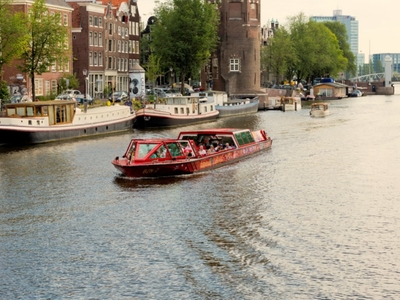
Amsterdam borrows its name from the Amstel river. 750 years ago Amsterdam was a fishing village between the Amstel and IJ rivers, and these rivers still form the city’s heart. The Amstel river flows through the middle of the city, and is now lined with many beautiful canal houses. These these old houses right by the riverside where built on clay ground, and while they’re still standing, some of them are no longer straight. These are referred to as the dancing houses, and you can best see how much they dance from the Amstel river itself, for instance from our canal cruisers.
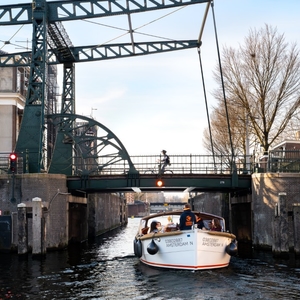
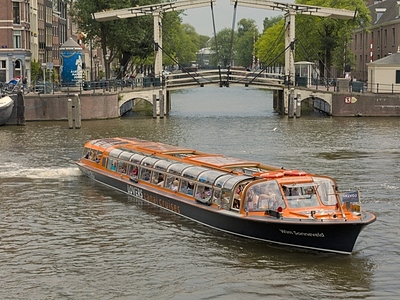
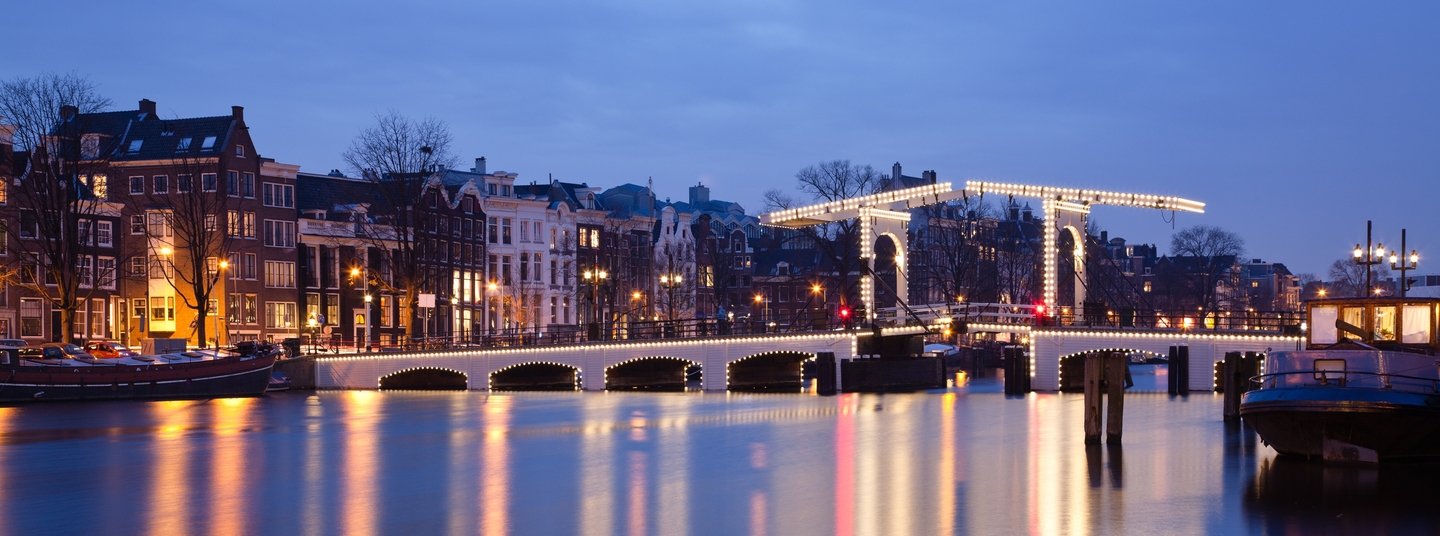
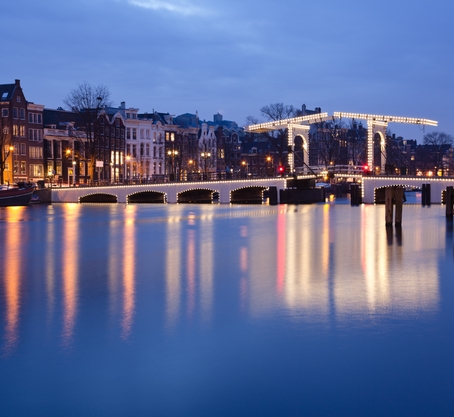
Also an important aspect of both the Amstel river and Amsterdam in general, are the many bridges across all the waterways. The most iconic one if of course the Skinny Bridge, a narrow bridge only accessible on foot and bike. An urban legend says the bridge was build by two rich but stingy sisters who lived on other sides of the river. They wanted to reach each other, but they didn’t want to pay for a regular concrete bridge, so that's how the small wooden bridge appeared. This is not true, the bridge was built by the city of Amsterdam, but it is narrow, or ‘skinny’ for the same reason: to save money. Nowadays an iconic monument and a romantic hotspot, it attracts a lot of walkers. However, because canal cruisers can go underneath, why not admire it up close from the water?

Red Light District
The Red Light District basically doesn’t need much of an introduction, but it’s definitely worth mentioning. Located in the oldest part of the city, the red light district has a centuries long history. The first historical records of prostitution taking place in the area are from the 15th century, and despite many attempts to stop it, the ladies of the night are still working. Now working behind the windows with the famous red lights, they lure in customers and close the curtains after they enter.
However, the appeal of the red light district doesn’t end there, there are also other fascinating sights. The most iconic building in the area is the Old Church, the oldest still standing building in Amsterdam, right in the middle of the district. Another highlight is the Our Lord In The Attic museum, a hidden church in an attic from when Catholics were forced into hiding. For those interested in the what goes on behind the windows, the Red Light Secrets museum shows you the history of the district and the work that happens here. And just as important, one street away is Amsterdam’s Chinatown district, filled with lively restaurants full of good food.

Canal Belt and Golden Bend
The entire city centre of Amsterdam is of course filled with canals, but the most majestic ones can be found on the canal belt, made up of the Herengracht, Keizersgracht and Prinsengracht. These canals are lined with large and beautiful houses, Amsterdam’s most iconic streets, and the home of the ultra rich. Wealthy merchants in the 17th century built majestic houses for themselves, squeezed right next to each other to all get a spot along the canals. The wider a house was, the more money the owner had, but that did not stop those with slightly less money from buying a slightly smaller plot. If you cruise along the canals, you will see many very narrow houses. The narrowest door along the belt is at the Singel canal, only 1 meter 80 wide. This house is secretly broader in the back, the narrowest house of Amsterdam is somewhere else, but it shows how popular a front door at a canal was.
The most prestigious part of the canal belt is the Golden Bend, along the Herengracht. Built in the Golden Age, the 17th century, when Amsterdam was at its richest, it is lined with wide and beautiful mansions. A fairly quiet corner, located between bustling streets, it’s the perfect place to admire the glory of the canal belt from the water. Nowadays most of the majestic houses have been converted into offices, they are too big and too expensive for individuals to live in. However, one house contains something more special. At number 497 you can find the Kattenkabinet, a small museum entirely dedicated to artworks of cats. Truly the most majestic of all.

Museum Square
Amsterdam’s museum district, around the majestic Museum Square, is home to three of the Netherlands’ largest and most famous museums. Most iconic is the Rijksmuseum, the national museum of the Netherlands, an enormous building that is home to the Nightwatch and several other iconic paintings. Built in 1885 after a design by architect Pierre Cuypers, who also designed Amsterdam’s central station, it contains the biggest collection of fine art and historical objects in the Netherlands, and attracts many millions of visitors a year.
Also world famous are the Van Gogh Museum and Stedelijk Museum. The Van Gogh Museum has the biggest collection of Van Gogh paintings, and tells the fascinating story of his life and work. Stedelijk Museum is the largest modern art museum in the country, and both known for its permanent collection of modern art and its many fascinating exhibitions. Also found on the square are MoCO, a modern art museum in an old villa, the diamond museum, showing Amsterdam’s historical relation with the diamond industry, and the Concertgebouw, the most important hall for classical music in Amsterdam. And it's also a lovely place for a picnic.
@LovelyCruises on Instagram